

The term “Black Friday” refers to the single day of the year when retailers finally go “into the black” (make a profit). It’s the day after Thanksgiving when crowds of turkey-stuffed shoppers descend on stores to take advantage of the season’s biggest holiday bargains. The first recorded use of the term “Black Friday” was applied to a financial crisis: specifically, the crash of the U.S. gold market on September 24, 1869. Two Wall Street financiers, Jay Gould and Jim Fisk, worked together to buy up as much of the nation’s gold as they could, hoping to drive the price sky-high and sell it for great profits. On that Friday in September, the conspiracy finally unraveled, sending the stock market into free-fall bankrupting everyone. As the story goes, after an entire year of operating in the red (at a loss) stores would supposedly earn a profit (“went into the black”) on the day after Thanksgiving, because holiday shoppers blew so much money on discounted merchandise. Though it’s true that retail companies used to record losses in red and profits in black when doing their accounting, this version of Black Friday’s origin is inaccurate. The true story behind Black Friday, however, is not as sunny as retailers might have you believe. Back in the 1950s, police in the city of Philadelphia used the term to describe the chaos that happened on the day after Thanksgiving, when hordes of suburban shoppers and tourists flooded into the city in advance of the big Army-Navy football game held on that Saturday every year. Not only would Philly cops not be able to take the day off, but they would have to work extra-long shifts dealing with the additional crowds and traffic. Shoplifters would also take advantage of the caos in stores to make off with merchandise, adding to the law enforcement headache. By 1961, “Black Friday” had caught on in Philadelphia, to the extent that the city’s merchants tried unsuccessfully to change it to “Big Friday” in order to remove the negative connotations. The term didn’t spread to the rest of the country until much later. Sometime in the late 1980s, however, retailers found a way to reinvent Black Friday and turn it into something that reflected positively on them and their customers. The result was the “red to black” concept of the holiday mentioned earlier, and the notion that the day after Thanksgiving marked the occasion when America’s stores finally turned a profit. The Black Friday story stuck and the one-day sales bonanza has morphed into a worldwide shopping event.
Chirinkito follow the tradition by offering great deals to our customers during Chirinkito Black Friday Week from the 24th to the 30th of November.

Breast Cancer Awareness Month has been celebrated in October since the eighties. It is called «Pink October» as people around the world adopt the pink colour and display a pink ribbon to raise awareness about the importance of prevention and routine screening for the early diagnosis of breast cancer, Chirinkito will participate with the campaign by letting you add pink colour free of charge to any tattoo during Pink October.
Prevention
30% of breast cancer cases are attributed to modifiable risk factors, by making better behavioural choices you can reduce your risk of breast cancer.
Changes include:
- maintaining a healthy weight
- staying physically active
- avoiding harmful use of alcohol
- breastfeeding
- quitting tobacco use and avoiding exposure to tobacco smoke
- avoiding the prolonged use of hormones
- avoiding excessive exposure to radiation
Symptoms
If you think you have one or more of the below symptoms, seek medical care immediately. Although these could be caused by a non-cancerous mass, an exam is required for proper diagnosis.
Symptoms of breast cancer include:
- change in nipple appearance or alteration in the skin surrounding the nipple (areola)
- bloody or abnormal nipple discharge
- a lump or thickening in the breast
- change in breast colour
- pitting of the breast skin
- breast or nipple pain

Halloween, celebrated annually on October 31, is a holiday with roots in the ancient Celtic festival of Samhain and the Western Christian feast of All Saints’ Day, and is now a popular celebration worldwide. Originally, Samhain marked the Celtic New Year and the end of harvest, a time when the boundary between the living and the dead was believed to be thin, the souls of the dead could return to the living world, and spirits or «fa creatures» might enter, leading to practices like lighting bonfires and wearing costumes to ward off spirits. As the Roman Catholic Church designated November 1 as All Saints’ Day to honor saints, the evening before, All Hallows’ Eve, incorporated some of Samhain’s traditions, eventually evolving into the modern Halloween. European immigrants in the 19th century brought Halloween customs to the U.S., where they blended with existing traditions to popularize the holiday. Nowadays in the U.S. and other parts of the world, Halloween is largely a nonreligious holiday. Modern celebrations include trick-or-treating, wearing costumes, carving jack-o’-lanterns, attending costume parties, decorating, and consuming treats.
Come and join us during Halloween week to view our selection of spooky tattoos and walk away with a brand new ink to scream about.

Cats are community
The 16th of October is Global Cat Day, a day set aside for cat owners and lovers worldwide to raise public awareness of the need to treat all cats humanely, with a focus on stray and feral cats. There are many ways you may honor cats on this special day, from cuddling with your cat to donating to an animal shelter.
Global Cat Day is an annual celebration that helps raise awareness for cats and kittens that are less fortunate than those who have forever homes. This day was created to help more cats live long and healthy lives.
Our special bond with cats spans thousands of years across all languages and countries. Cats are our family, friends and neighbors. Global Cat Day is a chance for cat lovers to band together and promote the well-being of cats. We can improve the lives of cats everywhere by encouraging humane treatment, increasing awareness, and supporting cat rescue initiatives.
Every action matters in improving the world for our feline companions, whether you participate in an event, share information on social media or donate your time and resources. Chirinkito promotes the right of cats to life and invites everyone to get involved with this cause. Ink your cat from the 13th to the 19th of October and we will donate a bag of cat food for every cat tattoo.

October 17th celebrates all things pasta on Chirinkito Pasta Day.
Pasta is a cornerstone of traditional Italian cuisine. The first reference dates to 1154 in Sicily. Typically, it is made from an unleavened dough of durum wheat flour. The flour is mixed with water or eggs and formed into sheets or various shapes. There are so many kinds of pasta! According to the Encyclopedia of Pasta by Oretta Zanini De Vita, 310 specific kinds of pasta identified by over 1300 names have been documented.
So how do we celebrate Pasta day at Chirinkito? Inklude a pasta related word or image to your tattoo and receive a special discount… if it sounds like fun contact us to find out more and ink your pasta!

September is Yoga Awareness Month and Chirinkito is here to show you how you can celebrate this month in the best possible way. Yoga is a 4000 years old physical activity that consists of maintaining isometric postures, followed by deep breathing and meditation. The Yoga Awareness Month was created to raise awareness of the physical, mental and spiritual benefits of yoga for people of all ages and to encourage people all over the world to experience the practice.
The term yoga derives from the Sanskrit word ‘yuj’ which means unite. It is said that yoga practitioners are united with the universe and the supreme consciousness. The origins of yoga can be traced back to the period of the Indus Saraswati Valley Civilisation (2700 B.C.). The person who practices yoga is known as a yogi and the first yogi or ‘Adiyogi’ was Lord Shiva. Shiva transferred all the yogic knowledge to the Saptarishis — the seven sages, who then spread this knowledge to the people in different parts of the world.
The sun was very important in the Vedic period. The Surya namaskara or “salutations to the sun” which contained a set of exercises and stretches that were performed as a prayer to the sun. The period between 800 B.C. to 500 A.D. is known as the ‘Classical Period’ of yoga. Types of yoga-like ‘Gyan Yoga’(Yoga of Knowledge), ‘Karma Yoga’ (Yoga of Action), and then ‘Bhakti Yoga’ (Yoga of Devotion) were created. The period between 500 A.D. to 1700 A.D. it is the time when Adi Sankaracharya’s teachings spread across the Indian subcontinent. Pranayama was introduced which taught people to control their breathings which had numerous benefits.
At Chirinkito we celebrate in our own way the National Yoga Awareness Month to raise awareness of the benefits of yoga-like mental and physical well-being, less stress and increased longevity of life.
How we do this?
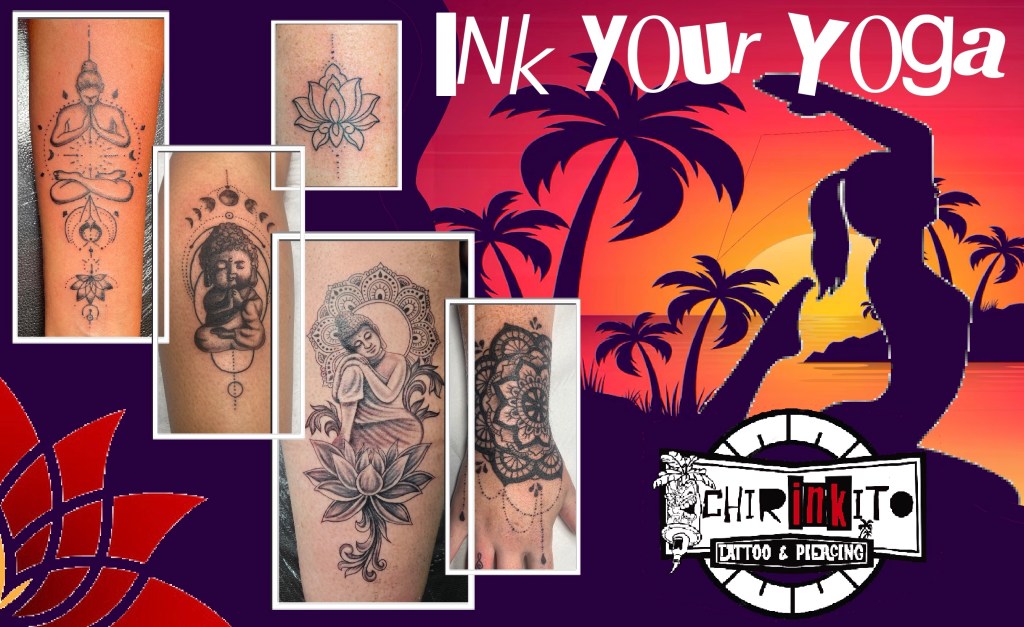
For the month of September you can enjoy special discounts for all tattoos related to the world of yoga, such as Buddhas, mandalas and more. Contact us for more info, create your personalised tattoo or check out our unique yoga designs.


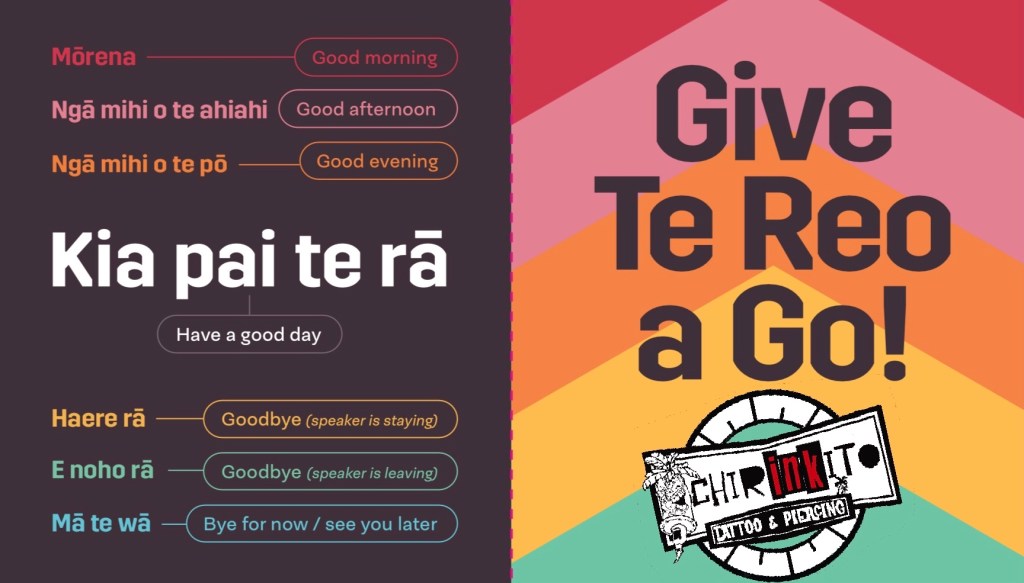
Join us at Chirinkito this September to celebrate the 50th anniversary of Te Wiki o Te Reo Māori (Māori Language Week).
Born of activism, the week grew from a single ‘Māori Language Day’ set up in 1972 to a full week by 1975. Te reo Maorí has grown in popularity and this year we celebrate the 50th anniversary.
Te Wiki takes place from 14 – 20 September 2025 and at Chirinkito we join the celebration by offering special offers during Te reo week on all Maori tattoos. Contact us to find out more and design your own unique Maori tattoo.
Below are some popular words and phrases to get you started in Te wiki, the Maori language.

To find out more about the Maori tattoo culture check out the official Chirinkito tattoo guide.



 Chirinkito tattoo & piercing