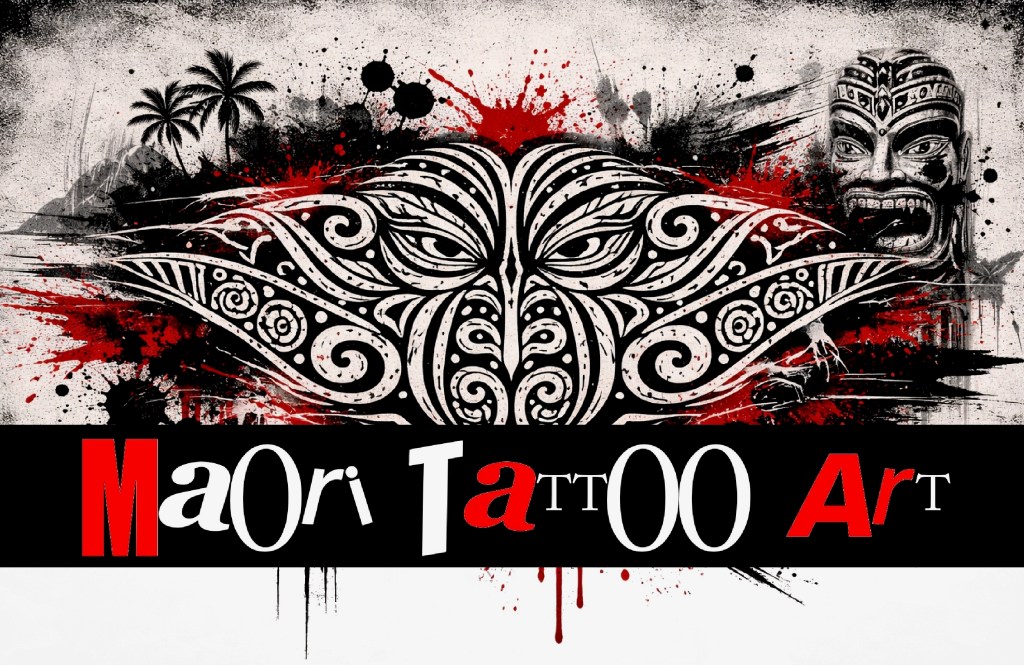
The Maori are indigenous people that originated in New Zealand. They have a form of body art, known as moko but more commonly referred to as Maori tattooing. The art form is considered highly sacred. Since the Maori people consider the head to be the most sacred part of the body, the most popular kind of Maori tattoo was the facial tattoo, which was composed of curved shapes and spiral like patterns. Often this tattoo covered the whole face and was a symbol of rank, social status, power and prestige. In Maori culture, tattooing is a rite of passage, which meant it was highly revered and ritualised. Tattooing would usually begin during adolescence.
Traditionally Maori tattoos are one of a kind. They are always highly intricate and detailed and display the craftsmanship and artistry of both the artist and the Maori culture. In Maori language the tattoo artist is called the tohunga ta moko which means moko specialist. They are highly respected and considered tapu which means inviolable or holy.
There is a significant distinction between Ta Moko and Kirituhi.
Ta moko is an important cultural practice that visually signifies someone’s whakapa (genealogy), identity and status within Māori society. Kirituhi, on the other hand, (kiri meaning skin and tui meaning art) is a Maori-inspired design which does not include someone’s heritage and is culturally appropriate for pakeha (someone of European descent).
Maori tattooing traditionally did not involve the use of needles; instead the Maori used knives and chisels made from shark teeth, sharpened bone or sharp stones. The chisel, also called the uhi, was made from albatross bon although some were said to be made of iron. Knives and chisels were either plain and smooth or serrated, and they were used depending on the intended pattern or design in the skin. The inks were made from all natural products. Burnt wood was used to create black pigments, while lighter pigments were derived from caterpillars infected with a certain type of fungus or from burnt kauri gum mixed with animal fat. The pigments were then stored in ornate containers called oko, which became family heirlooms. The black pigment that was made from burnt wood was reserved solely for facial tattoos; while those made from bugs or burnt gum was used for outlines and other less revered tattoos. Before the beginning the tohunga ta moko would study the persons facial structure to decide on the most appealing design. As mentioned before, no two Maori tattoos are alike.
Having a Maori tattoo applied was a very painful experience. First deep cuts were incised into the skin and then the chisel was dipped into the pigment and tapped into the cuts. Another way of doing it involved dipping the chisel into the pigment and inserting it into the skin by striking the end with a mallet. This manner of tattooing leaves the skin with grooves after healing, instead of the usual smooth surface left after needlepoint tattoos. Maori tattoo was once a long and labour intensive process, also because it was very painful only a few parts of the body were tattooed at a time to allow healing. There are two designs for the traditional Maori tattoos – the most common design only involved the blackening of the lines whilst the second (puhoro) called for blackening the background and leaving the lines clear.
Due to the sacred nature of the Maori tattoo, both who was undergoing the process and the ones involved in the process, could not eat with their hands or talk to anyone aside from the other people being tattooed. Those receiving tattoos made it a point not to cry out in pain, because to do so was a sign of weakness. Being able to withstand the pain was very important in terms of pride for Maori people. There were other rules and regulations when being tattooed, particularly while undergoing a facial work. For example, Maori had to abstain from sexual intimacy while undergoing the rite, and had to avoid all solid foods until the facial wounds had fully healed.
Only people of rank or status were allowed to have, and could afford to have, tattoos. A person who did not have any high-ranking social status, such as a slave, could not have a face tattoo. Those who had the means to get a tattoo but did not were seen as people of lower social status. The Maori facial tattoo was also used as a kind of identification card. For men, their face tattoo showed their accomplishments, status, position, ancestry and marital status. It is considered highly insulting to be unable to recognise a person’s power and position by his moko. It can also be noted that a person’s ancestry is indicated on each side of the face. The left side is generally the father’s side and the right side the mother’s. If one side of a person’s ancestry was not of rank, the corresponding side of the face would not have any tattoos. If the person undertaking the moko has no rank then the centre of the forehead would be left clear.
As we already discovered, Maori designs are rich in symbolism. However, understanding the specific meanings can be challenging for numerous reasons. One of which is that Maori culture is deeply rooted in oral tradition. Knowledge was often passed down through song, storytelling and spoken word. There are very few written records. Moreover, most of the written records that would have existed have been destroyed by European settlers who wanted to do away with Maori culture, believing it to be inferior to Western European values. Many traditional practices, including ta moko, were suppressed, communities were displaced and a great deal of language and history were lost. Another challenge in understanding Maori symbolism is that the designs hold a personal and ancestral significance. Ta moko represent a person’s whakapapa, achievements, and social status. The ways in which these were represented in the designs were often only the knowledge of the wearer and the artist, making these designs difficult for outsiders to interpret. Without the relevant cultural context it’s difficult to full grasp the meanings of these designs. Nonetheless, given the popularity of all tribal styles including Maori design, there is now a lot of information being available from various sources.
Maori designs are made up of a set of key visual motifs, all of which have their own meaning.
One of the central motifs is the Manawa line, which is often created out of negative space. It looks like a skin river throughout the design. Manawa translates to heart or breath of life. This powerful central element represents you, your life journey, your path.
Another element, which often shoots off from the manawa line, is the Koru which translates as loop or coil. This spiral-like motif can be used to represent new life, new beginnings, new growth. One way to use them is to represent members of your friends or family. For example, you might have a manawa line with 5 korus shooting from the left to represent the 5 family members on your mother’s side, and 3 korus on the right to represent the family on your father’s side. Korus can also be used to represent creation.
Pakati (the action of notching or incising and the notch or incision itself) traditionally represents qualities such as strength, bravery, and a warrior-like spirit.
Hikuaua is another pattern often seen in Maori carving. It often symbolises prosperity.
Unaunahi is known as fish scales. They can be used to represent lost loved ones.
The ahu ahu mataroa pattern is often used in the context of athleticism, sports, or any similar skillful endeavours. This design represents success, talent, and achievement.
Hei tiki are commonly thought of as good luck charms however, they carry a deeper meaning. They represent the unborn human embryo, symbolising new life and continuity.
The koru depicts new beginnings, growth and harmony.
hei matau, more commonly known as the fish hook symbolises prosperity. The fish hook also represents strength, determination and good health, as well as providing safe journey over water.
As a specialised tattoo studio, our artists have spent time studying Maori design. Whilst we acknowledge that certain sacred and genealogical symbols remain out of reach for non-maori folks, we carefully incorporate culturally appropriate designs in a stylistic and meaningful way. We are passionate about helping our clients to express their life journeys through their Maori tattoos.
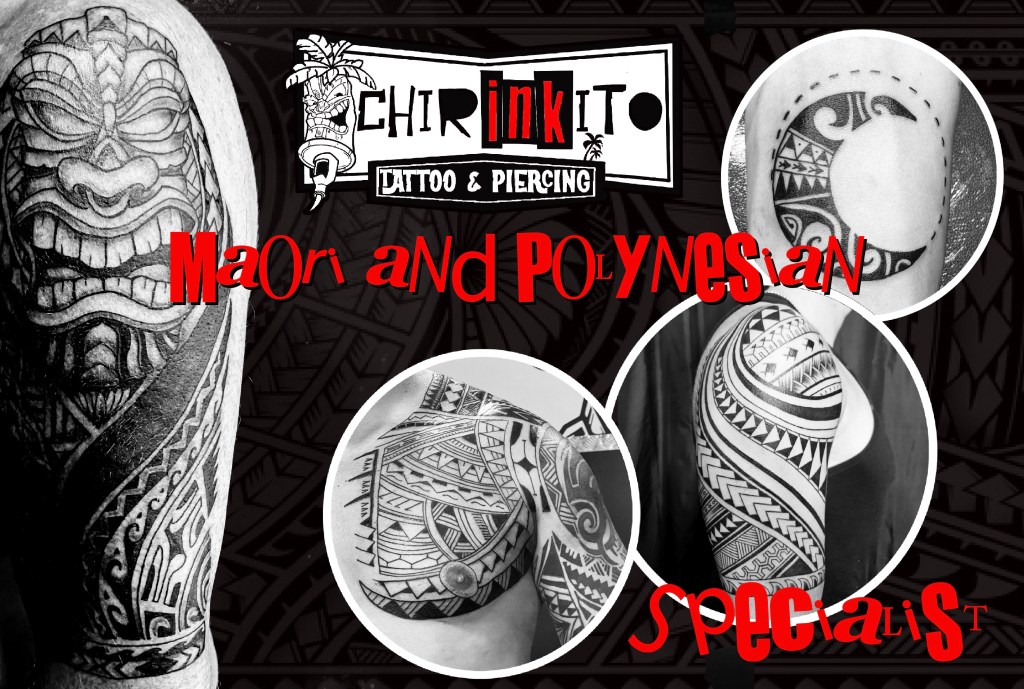
 Chirinkito tattoo & piercing