Tattooing in Japan has deep roots, dating as far back as the Jomon period (circa 10,000 BC), where archaeologists uncovered clay figurines with engraved or painted markings. These body markings were thought to hold spiritual or decorative meaning. The earliest written records (compiled by Chinese historians in 297 AD) describe Japanese men as adorning their faces and bodies with elaborate tattoo designs.
By the Kofun period (250–600 AD), instead of honour or spirituality, tattoos began to serve as punishment. Criminals were forcibly marked with tattoos to signal shame and social exclusion. Some areas branded criminals with characters like “dog” on the forehead, while others used crosses, lines or circles on the arms and face. This stigmatizing practice endured for centuries and created a long-standing association between tattoos and criminality.
By the late 1600s decorative tattooing began to re-emerge, often used by former criminals to cover their branded marks. This period marked the origin of tattooing’s link to the underworld, including early yakuza groups.
It was during the Edo period (1600–1868) that Japanese tattooing evolved into the vibrant, narrative-driven art form we recognize today. Popular literature, particularly the Chinese novel Suikoden, featured illustrations of tattooed heroes, which inspired a wave of decorative tattooing across the country. Tattoo artists, or Horishi, emerged as skilled craftspeople, working in tandem with artists who would paint designs directly onto the skin before they were inked. The full-body tattoo suit became a hallmark of Japanese tattoo culture.
In 1868, when Japan reopened to the West, eager to present a “civilized” image, the government banned tattooing. However, this didn’t stop foreign fascination—many Western, including King George V and Czar Nicholas II, sought tattoos from Japanese masters. Though outlawed, Japanese artists continued their work underground. Tattooing remained illegal until 1945, however despite legalization, tattoos continued to carry strong associations with the yakuza, leading many Japanese to hide their ink in public. Despite the growing popularity of tattoos among young Japanese tattoos remain controversial until this day. Many businesses, gyms, and hot springs still prohibit visibly tattooed patrons.
Symbols, colours and their meanings
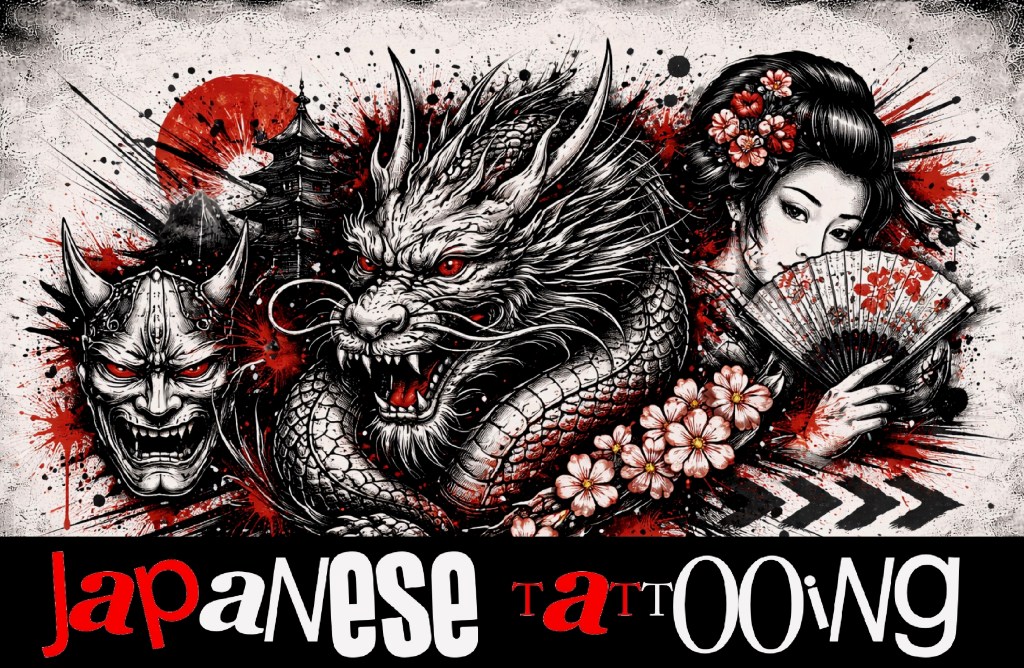
Arguably the most iconic symbol in Japanese traditional tattooing is the dragon. The dragon is a symbol of strength, power, and wisdom. In Japanese culture, they are kind-hearted creatures; the dragon is said to protect people and help them overcome evil. The color of the dragon is quite important, however, so these details should be planned accordingly. For example, a green dragon is also said to connect you with nature while a gold dragon stands for virtue.
The tiger is a powerful image around the world, but is especially hailed in Japanese culture. The tiger is said to bring courage, strength, and good fortune to those around it. What’s more, the tiger chases away disease and evil, creating harmony for people.
Koi fish are arguably the most recognizable images of Japanese tattooing. These fish can be found around the world, but are seen as especially important in Japan. They symbolize bravery and success for the individuals who wear them. Color-wise, a red koi is said to bring love upon the person who gets the image.
A more gentle design, the cherry blossom is a popular pick amongst the Japanese youth. The cherry blossom is said to represent the fragility of life, the beauty of life, as well as the ultimate end of life, that is death. These designs are vibrant with color and are unique in how the leaves are presented.
Often seen in American tattooing, the skull also has a meaning within Japanese tattoo culture. Similarly to the cherry blossom, the skull represents life and death. Where these symbols differ is that skulls are traditionally used to pay respects to someone who has been lost.
The Hannya mask is a traditional Japanese mask used in Noh theatrical performances, kyogen theatre and Shinto kagura dances. It is a representation of a jealous woman driven mad and transformed into a horrible demon. In a way she is similar to Medusa, but she has her own backstory and its roots are very much in Japanese culture.
The Japanese phoenix story draws its source from the story that’s indigenous to mainland China. Regardless of origin, phoenix tattoos are meant to symbolize rebirth and triumph, as well a renewal and rebuilding of one’s self.
While some symbols gain extra meaning from being certain colors, there are general rules to the coloration for everything else. Let’s explore these different options:
White in Japan is said to represent innocence and purity. Like a baby, white is a fresh start on life, yet to be corrupted. Innocent, honest, and pure.
Red is a vital color to Japanese culture as it is the color of blood, the vital fluid to life. It is recommended to have a piece of red somewhere within the design as it is said to serve as protection. In Japan, red represents happiness, joy, passion, and longevity; the joys and meaning of life.
In Japanese tattoo symbolism, the color orange primarily represents happiness and love. It can also symbolises knowledge, development and a vibrant, energetic spirit
Blue is usually tied with money and is said to bring good luck and fidelity for those who wear it.
Green being the color of nature is said to represent energy, youth, and life as a whole.
Purple traditionally was a sign of royalty as the pigment was once difficult to produce. Today, it still represents a certain classiness.
Pink is seen as a feminine color in Japan and thus, represents the delicate, fragile nature of life.
Yellow can represent a few things: in some areas yellow is seen as a symbol of joy and optimism while other areas see yellow as a sign of deceit
There is currently much debate and dispute over who has the right to get a Japanese tattoo. Some believe that getting them outside of Japanese culture is disrespectful. The argument is that these symbols are rich in history and mean much more to people who have grown up with this history. Getting a tattoo simply because it “looks cool” is considered frivolous and disrespectful to those who value their culture.
So how do you choose a Japanese style tattoo for yourself? When choosing a design, it’s important to consider the following points:
- Meaningful significance: Ensure the design carries the intended message or symbolism.
- Colors: In Japanese tattoos, a lot depends on the color scheme of the design. It’s better to carefully plan the color palette in advance.
- Additional elements and patterns: These can completely alter the meaning of the image, so choose them wisely.
The timeless aesthetic, cultural richness, and spiritual weight of Japanese tattooing continue to captivate people around the world. At Chirinkito Tattoo, we honour this enduring legacy. Through storytelling and symbolism, Japanese tattooing remains one of the most profound and respected tattoo style in the world.

 Chirinkito tattoo & piercing